Buy industriekultur.eu ?
We are moving the project
industriekultur.eu .
Are you interested in purchasing the domain
industriekultur.eu ?
domain@kv-gmbh.de · 0541-91531010
Buy industriekultur.eu ?
How to calculate an equilateral triangle inscribed in a square?
To calculate an equilateral triangle inscribed in a square, first find the length of the side of the square. Then, divide the side length by √3 to find the side length of the equilateral triangle. Finally, calculate the area of the equilateral triangle using the formula A = (√3/4) x side length squared. **
How can a mathematical pyramid be inscribed in a cone?
A mathematical pyramid can be inscribed in a cone by placing the apex of the pyramid at the center of the base of the cone and aligning the base of the pyramid with the base of the cone. The edges of the pyramid will then extend from the apex to the points where the slant height of the cone intersects the base. This creates a pyramid that is inscribed within the cone, with its vertices touching the curved surface of the cone. This relationship can be described using geometric principles and equations to determine the dimensions and angles of the pyramid and cone. **

Similar search terms for Inscribed
Top-Angebote
Products related to Inscribed:
-
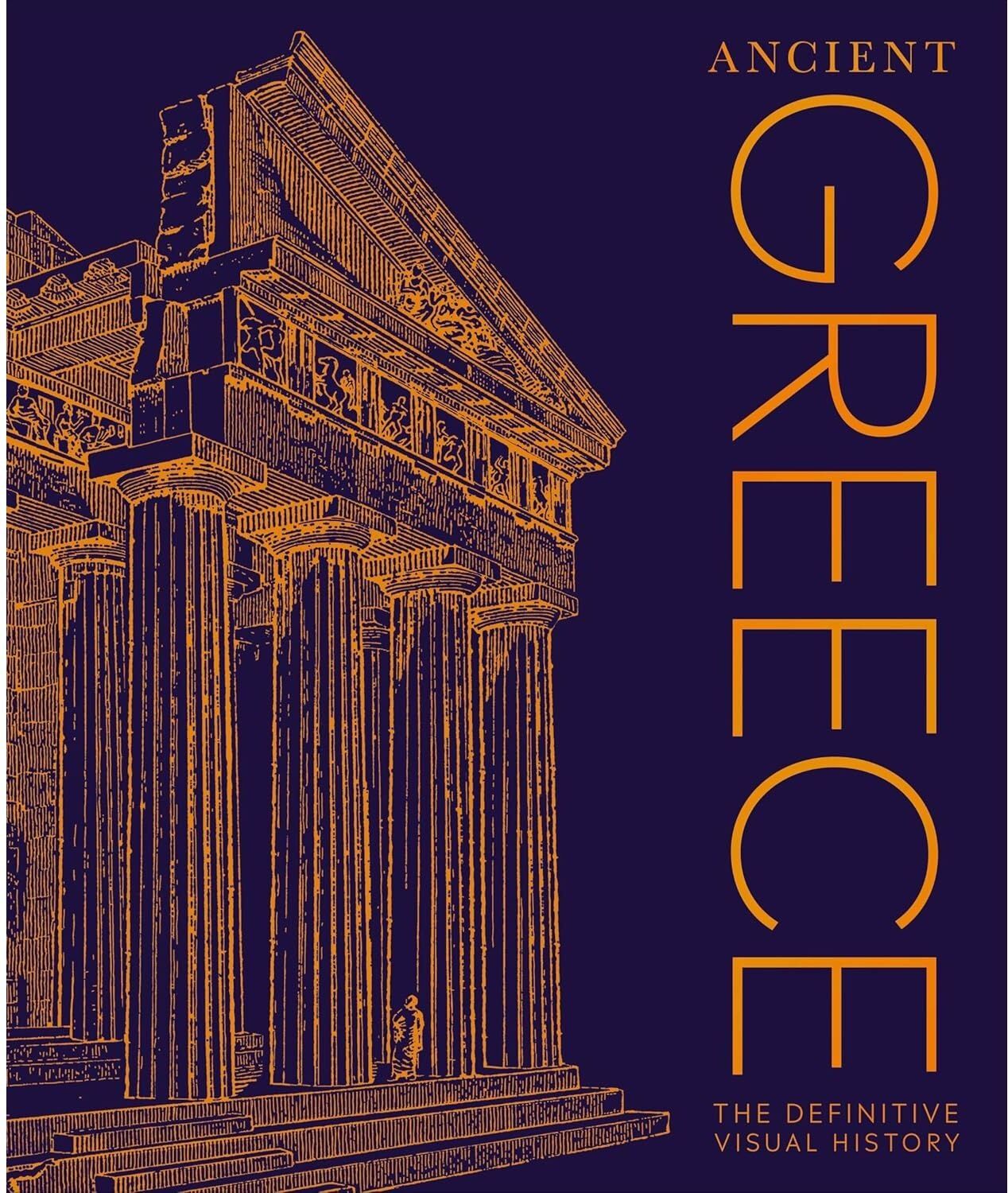
Ancient Greece: The Definitive Visual History (DK Classic History)Embark upon a fascinating journey through ancient Greece – from its rise and fall to its lasting legacy throughout the Western world. Spanning more than 3,000 years, Ancient Greece explores the tumultuous history of this glorious empire in vivid detail – from its Minoan and Mycenaean origins to the apogee of the warring city-states of Athens and Sparta, and from the death of its most charismatic leader, Alexander the Great, to its ultimate defeat by Rome. Sumptuous photography and authoritative, engaging text cover every facet of life in ancient Greece, from art, entertainment, and schools of thought to politics, medicine, and war, while the myths and religious beliefs of the ancient culture are explored and explained in depth. Greece’s military and political power shines through in fascinating maps of its legendary battles. Buried palaces and the Athenian Agora where Plato and Socrates discussed philosophy are brought back to life with stunning CGI artworks. And the stories of everyone from ordinary citizens to lawmakers and the first Olympic athletes are retold through eyewitness accounts and original artefacts.19,99 £*Shipping: 2,99 £Secure redirect to the provider
-
Fern Press Sapiens A Graphic History Volume 3: The Masters of History - Non Fiction - Graphic History SeriesTitle:. Sapiens: A Graphic History Volume 3: The Masters of History Overview:. Delve into the third instalment of the acclaimed Sapiens: A Graphic History, where Yuval Noah Harari’s sweeping ideas meet vibrant illustration, making big-history concepts approachable, memorable, and utterly engaging. In Volume 3, The Masters of History, the narrative zooms out to ask: what actually drives the arc of civilizations—the engine of empire, the lure of money, or the pull of belief—and could there be a hidden force even stronger? Witty, insightful, and provocatively visual, this volume translates Harari’s non-fiction blockbuster into a graphic format that readers can skim, savor, and debate. The creators—Harari alongside David Vandermeulen and Daniel Casanave—employ a playful “master of history” game-show framework to personify abstract forces, turning centuries of complex events into lively conversations, crisp panels, and clear diagrams. It’s not mere entertainment; it’s a rigorous, thought-provoking synthesis designed for curious minds who want to understand how the world became the way it is. Accessible to newcomers and deeply rewarding for long-time readers, this volume invites discussion, reflection, and a fresh appreciation of human history. This is non-fiction rewritten for the graphic age, perfect for readers who want the clarity of a guidebook and the imagination of a comic. What Makes This Book Stand Out:. What sets Volume 3 apart is the way it blends Harari’s provocative historical theses with Vandermeulen’s storytelling instincts and Casanave’s expressive artwork. The game-show conceit makes abstract forces tangible—empires, economies, religions, and ideas—so you can see how they pull, push, and occasionally derail the course of history. The panels balance humor with rigor, offering bite-sized insights without sacrificing depth. The graphic medium amplifies big ideas: economic systems are shown as living threads; religious movements become character-driven plots; political power unfolds in stylized sequences. The result is a readable, visually stimulating narrative that respects the reader’s intelligence while making complex history feel immediate and relevant. It’s the kind of book that invites rereading, diagram-building, and discussion—ideal for study, gifting, or personal curiosity. Who This Book Is Perfect For:. This volume speaks to readers who love grand-scale history presented with accessible clarity: history buffs who crave fresh angles, graphic-novel enthusiasts seeking substantive nonfiction, and students or teachers looking for a compelling classroom companion. It’s equally suited to BookTok and book-club conversations where ideas spark debate. Fans of Harari’s original Sapiens will appreciate the graphic translation, while newcomers can enjoy a vivid, self-contained entry point into civilization’s driving forces. Whether you’re assembling a personal library, seeking a thought-provoking gift for a curious mind, or hunting for a...22,00 £*Shipping: 2,99 £Secure redirect to the provider



-
How do I calculate the area of a square inscribed in a circle?
To calculate the area of a square inscribed in a circle, you can use the formula A = s^2, where A is the area of the square and s is the length of one of its sides. To find the length of the side, you can use the formula s = √2r, where r is the radius of the circle. Once you have the length of the side, you can use the formula A = s^2 to calculate the area of the square. **
-
Is it possible for the name on a gravestone to be incorrectly inscribed?
Yes, it is possible for the name on a gravestone to be incorrectly inscribed. This can happen due to human error during the inscription process, miscommunication between the family and the engraver, or even due to deteriorating conditions of the gravestone over time. It is important for families to carefully review the inscription before it is finalized to ensure accuracy. If an error is discovered after the fact, it may be possible to have the gravestone corrected or replaced. **
-
How do you calculate the radius of a sphere inscribed in a pyramid?
To calculate the radius of a sphere inscribed in a pyramid, you can use the formula for the inradius of a pyramid, which is given by the formula r = V / (s * A), where V is the volume of the pyramid, s is the semi-perimeter of the base, and A is the area of the base. Once you have the inradius of the pyramid, you can use the fact that the inradius of a sphere inscribed in a pyramid is equal to the inradius of the pyramid to find the radius of the inscribed sphere. **
-
How do you calculate the volume of a sphere inscribed in a cube?
To calculate the volume of a sphere inscribed in a cube, you first need to find the length of the side of the cube. This can be done by using the diameter of the sphere, which is equal to the side length of the cube. Once you have the side length, you can use the formula for the volume of a sphere, V = (4/3)πr^3, where r is the radius of the sphere (which is half the side length of the cube) to calculate the volume of the sphere. **


What is the significance of decoding the Celtic Futhark runes inscribed on a pendant?
Decoding the Celtic Futhark runes inscribed on a pendant can hold significant historical and cultural value. The Futhark runes are an ancient writing system used by the Celts, and deciphering them can provide insight into their language, beliefs, and traditions. It can also help to uncover the meaning and purpose of the pendant, shedding light on its potential religious, spiritual, or personal significance to the wearer. Additionally, decoding the runes can contribute to a better understanding of Celtic history and the ways in which their culture has influenced modern society. **
How is a regular n-sided polygon inscribed in a circle with a radius of 10 cm described?
A regular n-sided polygon inscribed in a circle with a radius of 10 cm is described as having all its vertices lying on the circumference of the circle. The distance from the center of the circle to any vertex of the polygon is equal to the radius of the circle, which in this case is 10 cm. The polygon is also symmetrical, with all its sides and angles being equal. The length of each side of the polygon can be calculated using the radius of the circle and the trigonometric functions. **
Top-Angebote
Products related to Inscribed:
-
Thunderworks Games Tenpenny Parks Innovation Expansion - Strategic Park ManagementTake your Tenpenny Parks experience further with the Innovation expansion from Thunderworks Games. Develop new ideas for your park, recruit additional specialists, and introduce exciting novelties that can change the way you plan and build. This expansion adds fresh strategic options to the park-management gameplay of Tenpenny Parks. Use research to improve your development plans, bring new specialists into your team, and create more distinctive attractions as you compete to shape a successful park. What’s included: Key features: - New innovation-focused content for Tenpenny Parks - Additional specialists to support your plans - New research and novelty options - More strategic choices during development Please note: This is an expansion and requires the Tenpenny Parks base game to play. It is suitable for players who want to add variety and further strategic depth to their existing game.35,99 £*Shipping: 3,95 £Secure redirect to the provider
-
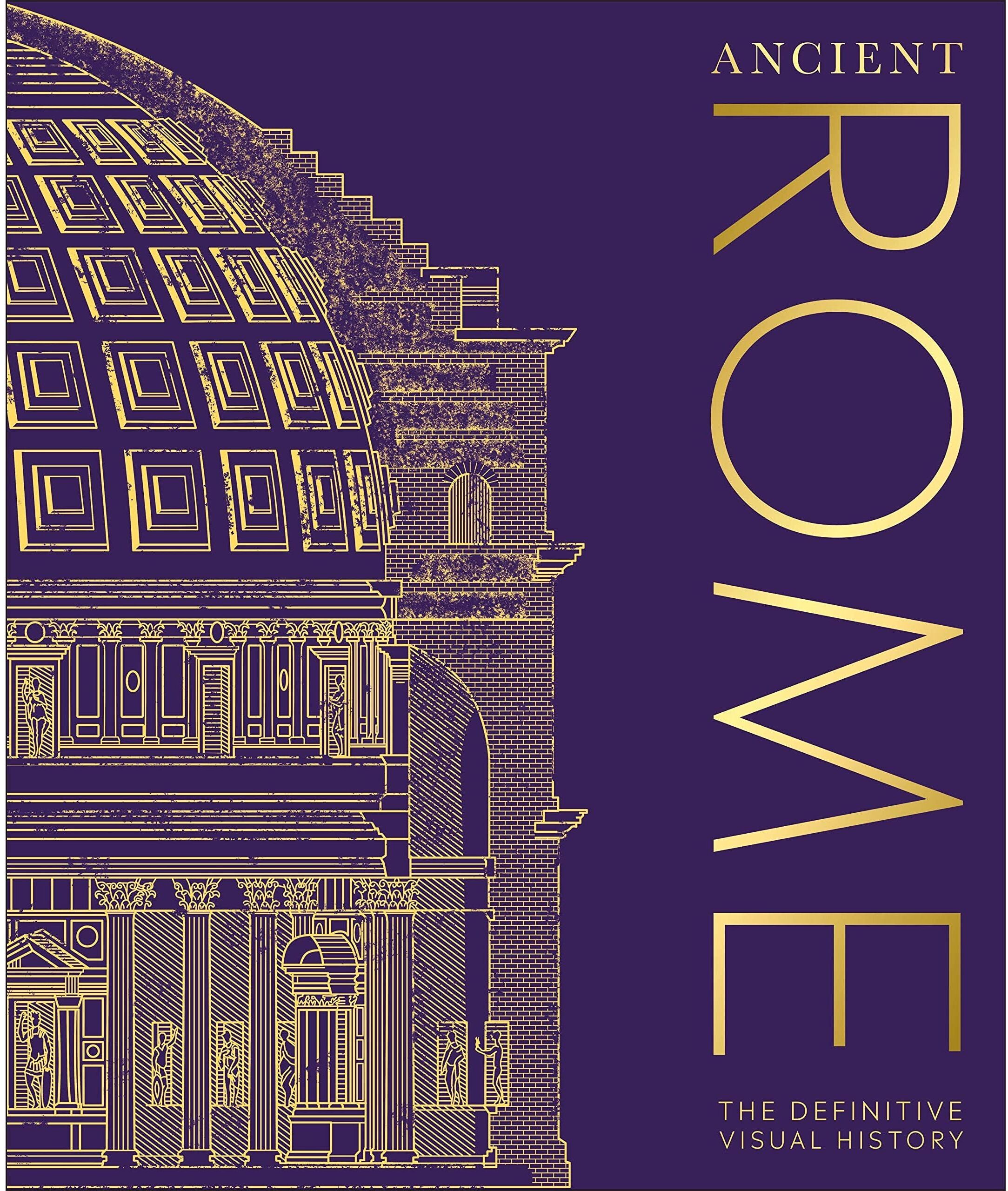
Ancient Rome: The Definitive Visual History (DK Classic History)Immerse yourself in the history of ancient Rome - from its origins as a small settlement on the Palatine Hill to its peak as an empire reigning over 90 million people, and its tumultuous decline. Covering more than 1,000 years of history, and an empire that stretched from Scotland to Syria, Ancient Rome reveals in vivid detail all of the key political, cultural, and military events that shaped the Roman Empire and explores what it was like to live in a society that laid the foundations for many aspects of the modern world. Sumptuous photography and engaging text cover every facet of life in ancient Rome, from art, entertainment, and fashion to engineering, medicine, and war, while detailed maps trace the rise of the mighty Roman Empire. Step back in time in the pages of this history book to discover:- Themed spreads explore developments in areas such as sculpture, religion, warfare, and engineering. - Includes tales of the most dramatic events and battles in Roman history, as well as profiles of influential historical and cultural figures. - An optional 80pp reference section includes sections on rulers, gods and goddesses, and key sites. Featuring Rome's greatest emperors, from Augustus to Constantine, as well as profiles of generals, historians, and influential women, Ancient Rome also delves into the fascinating stories of gladiators, bakers, and enslaved people. The most iconic buildings of Rome are brought to life with specially commissioned CGI recreations, while the stories of ordinary citizens, soldiers, and persecuted groups from across the empire are told with the help of illustrations, artefacts, and eyewitness accounts. Beautifully illustrated and unparalleled in scope, Ancient Rome is the perfect book for anyone who is interested in this defining period of world history.19,95 £*Shipping: 2,99 £Secure redirect to the provider
-
Ancient Greece: The Definitive Visual History (DK Classic History)Embark upon a fascinating journey through ancient Greece – from its rise and fall to its lasting legacy throughout the Western world. Spanning more than 3,000 years, Ancient Greece explores the tumultuous history of this glorious empire in vivid detail – from its Minoan and Mycenaean origins to the apogee of the warring city-states of Athens and Sparta, and from the death of its most charismatic leader, Alexander the Great, to its ultimate defeat by Rome. Sumptuous photography and authoritative, engaging text cover every facet of life in ancient Greece, from art, entertainment, and schools of thought to politics, medicine, and war, while the myths and religious beliefs of the ancient culture are explored and explained in depth. Greece’s military and political power shines through in fascinating maps of its legendary battles. Buried palaces and the Athenian Agora where Plato and Socrates discussed philosophy are brought back to life with stunning CGI artworks. And the stories of everyone from ordinary citizens to lawmakers and the first Olympic athletes are retold through eyewitness accounts and original artefacts.19,99 £*Shipping: 2,99 £Secure redirect to the provider
-
Fern Press Sapiens A Graphic History Volume 3: The Masters of History - Non Fiction - Graphic History SeriesTitle:. Sapiens: A Graphic History Volume 3: The Masters of History Overview:. Delve into the third instalment of the acclaimed Sapiens: A Graphic History, where Yuval Noah Harari’s sweeping ideas meet vibrant illustration, making big-history concepts approachable, memorable, and utterly engaging. In Volume 3, The Masters of History, the narrative zooms out to ask: what actually drives the arc of civilizations—the engine of empire, the lure of money, or the pull of belief—and could there be a hidden force even stronger? Witty, insightful, and provocatively visual, this volume translates Harari’s non-fiction blockbuster into a graphic format that readers can skim, savor, and debate. The creators—Harari alongside David Vandermeulen and Daniel Casanave—employ a playful “master of history” game-show framework to personify abstract forces, turning centuries of complex events into lively conversations, crisp panels, and clear diagrams. It’s not mere entertainment; it’s a rigorous, thought-provoking synthesis designed for curious minds who want to understand how the world became the way it is. Accessible to newcomers and deeply rewarding for long-time readers, this volume invites discussion, reflection, and a fresh appreciation of human history. This is non-fiction rewritten for the graphic age, perfect for readers who want the clarity of a guidebook and the imagination of a comic. What Makes This Book Stand Out:. What sets Volume 3 apart is the way it blends Harari’s provocative historical theses with Vandermeulen’s storytelling instincts and Casanave’s expressive artwork. The game-show conceit makes abstract forces tangible—empires, economies, religions, and ideas—so you can see how they pull, push, and occasionally derail the course of history. The panels balance humor with rigor, offering bite-sized insights without sacrificing depth. The graphic medium amplifies big ideas: economic systems are shown as living threads; religious movements become character-driven plots; political power unfolds in stylized sequences. The result is a readable, visually stimulating narrative that respects the reader’s intelligence while making complex history feel immediate and relevant. It’s the kind of book that invites rereading, diagram-building, and discussion—ideal for study, gifting, or personal curiosity. Who This Book Is Perfect For:. This volume speaks to readers who love grand-scale history presented with accessible clarity: history buffs who crave fresh angles, graphic-novel enthusiasts seeking substantive nonfiction, and students or teachers looking for a compelling classroom companion. It’s equally suited to BookTok and book-club conversations where ideas spark debate. Fans of Harari’s original Sapiens will appreciate the graphic translation, while newcomers can enjoy a vivid, self-contained entry point into civilization’s driving forces. Whether you’re assembling a personal library, seeking a thought-provoking gift for a curious mind, or hunting for a...22,00 £*Shipping: 2,99 £Secure redirect to the provider
-
How to calculate an equilateral triangle inscribed in a square?
To calculate an equilateral triangle inscribed in a square, first find the length of the side of the square. Then, divide the side length by √3 to find the side length of the equilateral triangle. Finally, calculate the area of the equilateral triangle using the formula A = (√3/4) x side length squared. **
-
How can a mathematical pyramid be inscribed in a cone?
A mathematical pyramid can be inscribed in a cone by placing the apex of the pyramid at the center of the base of the cone and aligning the base of the pyramid with the base of the cone. The edges of the pyramid will then extend from the apex to the points where the slant height of the cone intersects the base. This creates a pyramid that is inscribed within the cone, with its vertices touching the curved surface of the cone. This relationship can be described using geometric principles and equations to determine the dimensions and angles of the pyramid and cone. **
-
How do I calculate the area of a square inscribed in a circle?
To calculate the area of a square inscribed in a circle, you can use the formula A = s^2, where A is the area of the square and s is the length of one of its sides. To find the length of the side, you can use the formula s = √2r, where r is the radius of the circle. Once you have the length of the side, you can use the formula A = s^2 to calculate the area of the square. **
-
Is it possible for the name on a gravestone to be incorrectly inscribed?
Yes, it is possible for the name on a gravestone to be incorrectly inscribed. This can happen due to human error during the inscription process, miscommunication between the family and the engraver, or even due to deteriorating conditions of the gravestone over time. It is important for families to carefully review the inscription before it is finalized to ensure accuracy. If an error is discovered after the fact, it may be possible to have the gravestone corrected or replaced. **
Similar search terms for Inscribed
-
Black and British: An Illustrated History (Contemporary History) by David OlusogaDescription:. Condition: BRAND NEW. Format: HardcoverThis beautiful hardback gift book is a stunning visual journey through Black British history for younger readers by award-winning historian and broadcaster David Olusoga and illustrated by Jake Alexander and Melleny Taylor.The essential starting place for anyone who wants to learn about Black British History. David Olusoga’s thought provoking text charts the forgotten histories of Black people in Britain from Roman times right through to the present day. From Roman Africans guarding Hadrian’s Wall, to an African trumpeter in the court of Henry the Eighth, Black Georgians fighting for the abolition of slavery, Black soldiers fighting for Britain in the First World War, Windrush and right up today. These are the stories that brought us all together in this country.When did Africans first come to Britain?Who are the well-dressed black children in Georgian paintings?Why did the American Civil War disrupt the Industrial Revolution?These and many other questions are answered in this essential introduction to 1800 years of the Black British history.TitleBlack and British: An Illustrated History (Contemporary History) by David Olusoga Delivery ContentReviews11,99 £*Shipping: 2,99 £Secure redirect to the provider
-
Black and British David Olusoga Collection 3 Books Set (An Illustrated History [Hardcover], A short essential history, A Forgotten History)Description:. Condition: BRAND NEW. Format: Mixed lot. Black and British An Illustrated History [Hardcover]:The essential starting place for anyone who wants to learn about Black British History. David Olusoga’s thought provoking text charts the forgotten histories of Black people in Britain from Roman times right through to the present day. From Roman Africans guarding Hadrian’s Wall, to an African trumpeter in the court of Henry the Eighth, Black Georgians fighting for the abolition of slavery.Black and British: A short, essential history:When did Africans first come to Britain? Who are the well-dressed black children in Georgian paintings? Why did the American Civil War disrupt the Industrial Revolution? These and many other questions are answered in this essential introduction to 1800 years of the Black British history: from the Roman Africans who guarded Hadrian’s Wall right up to the present day.Black and British: A Forgotten History:Drawing on new genealogical research, original records, and expert testimony, Black and British reaches back to Roman Britain, the medieval imagination, Elizabethan ‘blackamoors’ and the global slave-trading empire. It shows that the great industrial boom of the nineteenth century was built on American slavery, and that black Britons fought at Trafalgar and in the trenches of both World Wars.. Title. Black and British David Olusoga Collection 3 Books Set (An Illustrated History [Hardcover], A short essential history, A Forgotten History). Delivery. Content. Reviews23,99 £*Shipping: 2,99 £Secure redirect to the provider
-
How do you calculate the radius of a sphere inscribed in a pyramid?
To calculate the radius of a sphere inscribed in a pyramid, you can use the formula for the inradius of a pyramid, which is given by the formula r = V / (s * A), where V is the volume of the pyramid, s is the semi-perimeter of the base, and A is the area of the base. Once you have the inradius of the pyramid, you can use the fact that the inradius of a sphere inscribed in a pyramid is equal to the inradius of the pyramid to find the radius of the inscribed sphere. **
-
How do you calculate the volume of a sphere inscribed in a cube?
To calculate the volume of a sphere inscribed in a cube, you first need to find the length of the side of the cube. This can be done by using the diameter of the sphere, which is equal to the side length of the cube. Once you have the side length, you can use the formula for the volume of a sphere, V = (4/3)πr^3, where r is the radius of the sphere (which is half the side length of the cube) to calculate the volume of the sphere. **
-
What is the significance of decoding the Celtic Futhark runes inscribed on a pendant?
Decoding the Celtic Futhark runes inscribed on a pendant can hold significant historical and cultural value. The Futhark runes are an ancient writing system used by the Celts, and deciphering them can provide insight into their language, beliefs, and traditions. It can also help to uncover the meaning and purpose of the pendant, shedding light on its potential religious, spiritual, or personal significance to the wearer. Additionally, decoding the runes can contribute to a better understanding of Celtic history and the ways in which their culture has influenced modern society. **
-
How is a regular n-sided polygon inscribed in a circle with a radius of 10 cm described?
A regular n-sided polygon inscribed in a circle with a radius of 10 cm is described as having all its vertices lying on the circumference of the circle. The distance from the center of the circle to any vertex of the polygon is equal to the radius of the circle, which in this case is 10 cm. The polygon is also symmetrical, with all its sides and angles being equal. The length of each side of the polygon can be calculated using the radius of the circle and the trigonometric functions. **
* All prices are inclusive of VAT and, if applicable, plus shipping costs. The offer information is based on the details provided by the respective shop and is updated through automated processes. Real-time updates do not occur, so deviations can occur in individual cases. ** Note: Parts of this content were created by AI.